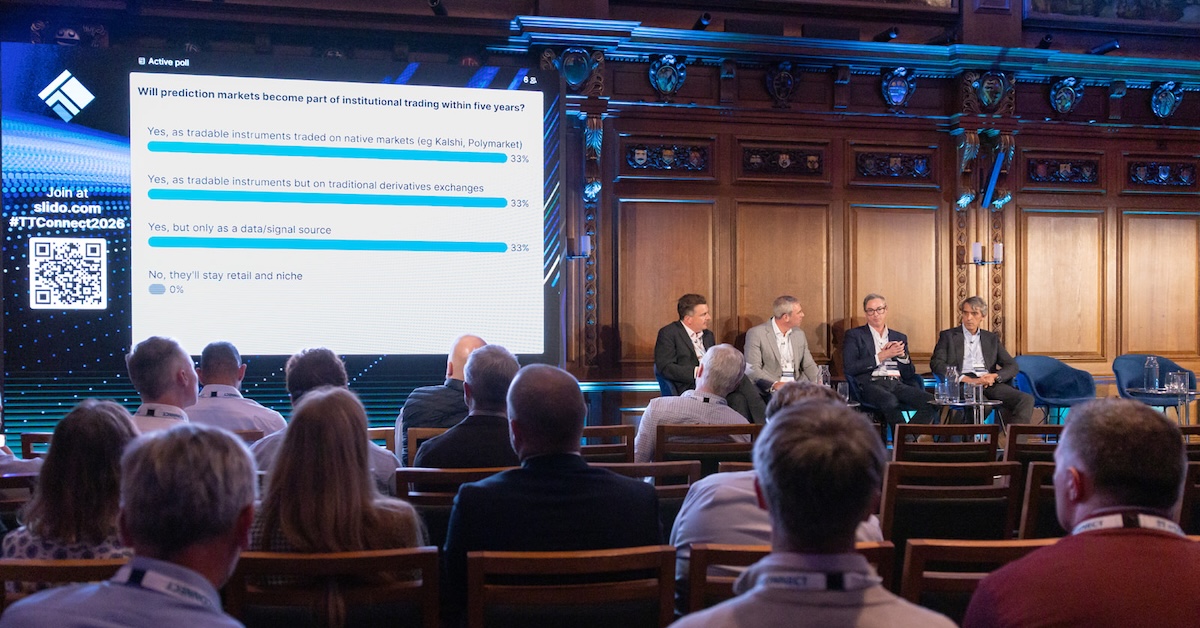

Prediction markets have generally been left out of most trading strategies, but that is rapidly changing. Over the past year, event contracts have become increasingly popular and are starting to be integrated into the systems that global institutions already use.
Continue Reading →Demand for raw computing power, or “compute,” has kept pace with, and in some cases outstripped, the rapid growth of AI. That has created a new source of volatility, and with it, a new source of investment. The financialization of the chips that power AI’s LLMs means that the graphics processing unit (GPU) is on its way to becoming a mainstream trading opportunity. The hardware itself stays physical, but by hedging the price and time of its rental, firms can turn an unpredictable cost into a manageable one: classic financial risk transfer.
Continue Reading →The institutional adoption of prediction markets, artificial intelligence and the potential of 24/7 trading is injecting unprecedented complexity into compliance programs. But while the markets are evolving at breakneck speed, one fundamental truth remains: the regulatory requirements have not changed. For trading firms, this means compliance workflows must urgently evolve to accommodate entirely new asset classes and contracts. To help firms navigate this shifting landscape and avoid regulatory scrutiny, together with Foley & Lardner, we recently co-hosted an exclusive regulatory roundtable in Chicago.
Continue Reading →As margin requirements grow in both scale and complexity, firms across the derivatives market face increasing pressure on capital efficiency. This was one of the driving factors behind Trading Technologies’s acquisition of OpenGamma last December.
At Trading Technologies, we don’t wait for the future; we build it. We pioneered electronic trading with MD Trader®, launched the industry’s first enterprise SaaS platform, and embraced cloud and API-first architecture years before they became industry standards. That track record matters now because the next wave is here: Artificial Intelligence.
Continue Reading →