
 Scott Shellady has a broad, strong range of technical and trading experience in both commodities and financial products focused on North America, Europe and Asia. He has been involved in the futures industry since 1990, with time spent at Prime International Trading London, Speer Leeds and Aubrey G. Lanston Futures. After 11 years in London, Mr. Shellady returned to Chicago to run a small family futures and options business that was started over 50 years ago. Currently, he serves as an adjunct finance professor of finance at DePaul University and an SVP at TJM Brokerage in Chicago, where he can frequently be seen wearing his trademark “cow jacket” on CNBC, Bloomberg, CNN and Fox Business News. In addition, Mr. Shellady is deeply involved with the launch of his new website, Windy City Trader, a warehouse of trader tips, market analysis and webinars. Follow Scott on Twitter at @ScottTheCowGuy.
TT® Learning
Maximize your use of the TT platform with comprehensive yet easy-to-follow learning pathways.
Release Notes
Explore key releases enhancing trade execution and management.
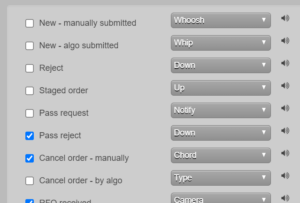
Settings- Sounds for Algo submitted/canceled orders
- Currently, the sounds for “New” and “Cancel” orders play for both manual orders and orders by automated tools. We have now separated the order actions between manual and algo to allow you to be notified when one or the other occurs. To implement this, the current two sound settings have been renamed to reference manual actions, and we have added two new sound settings for algo actions.
Settings- Increase number of custom action buttons
- You can now configure up to fifty (50) custom action buttons on the Order Ticket and MD Trader. Previously the limit was twenty (20) buttons per widget.
OMS Care order passing
- We have extended our current OMS order passing ability to now include the ability to pass staged orders.
Upcoming
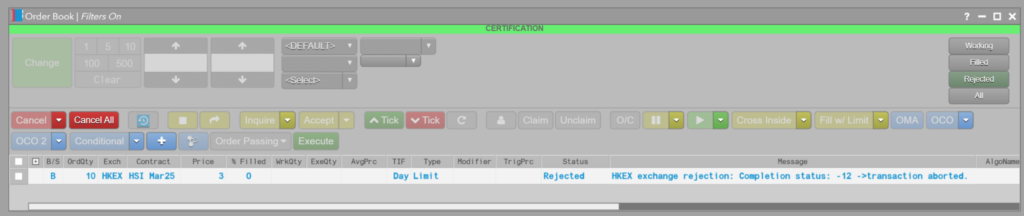
Order Book display Rejected orders for the current session
- The Order Book and Orders and Fills widget (OFW) now display rejected orders for the current session. A new “Message” column can optionally be exposed that displays the same reject message text displayed in the Audit Trail. The Message column supports filtering/searching on the message text string. A new quick filter button named “Rejected” displays in the top upper right portion of the Order Book, that when clicked applies a filter to only show rejected orders. Also as part of this work, in the Order Book Settings you can also customize the row color for rejected orders.
Display Settlement Date for NDFs and Spot FX
- We now display Settlement Date for NDFs and Spot FX in the appropriate grid widgets, e.g., OB, OFW, Fills, Audit Trail, etc.


 Rick Beaman is Vice President and Head of the Nasdaq Futures Exchange (NFX). Based in Houston, TX, Rick oversees client and Broker relations for U.S. Commodities and all business activities for NFX. Mr. Beaman joined Nasdaq in May 2010 and has been involved in energy market exchanges, clearing, product development and brokering for more than 20 years. Rick is also a veteran of the U.S. Navy. In this post, Rick explains how the Navy shaped his career in the energy market and predicts the next big thing in commodity futures.