TT Connect: The Evolution of Execution – What Audience Polling Revealed About the Future of Trading
If TT Connect revealed one thing, it’s that trading is increasingly complex, and attendees expect that complexity to accelerate.
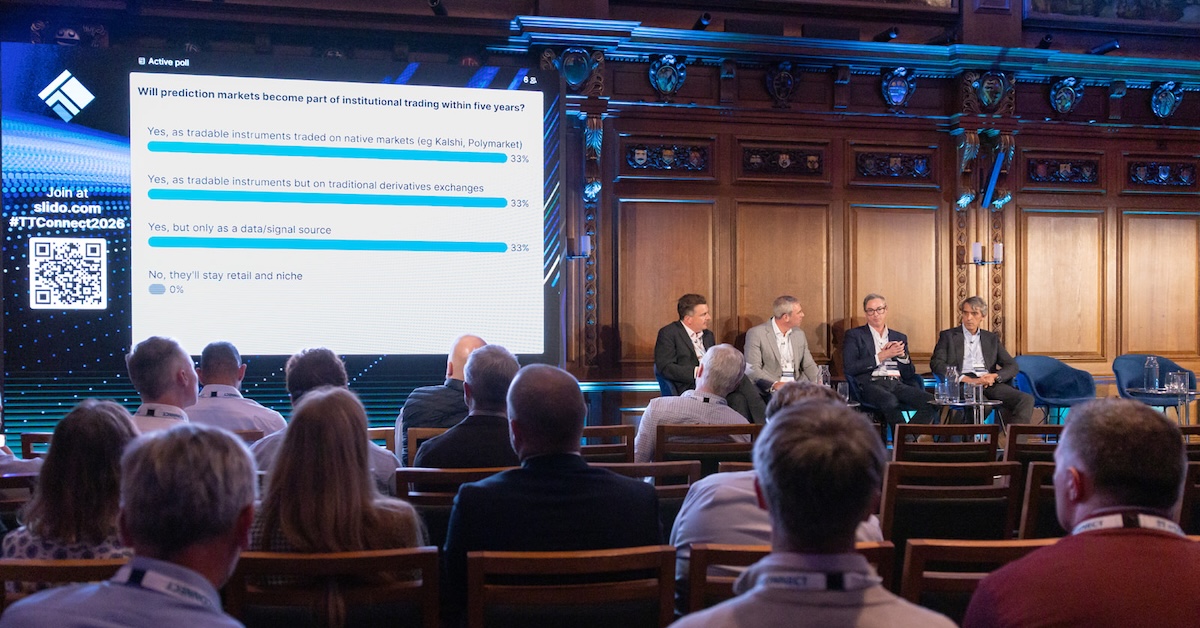
More than 150 market participants gathered in London on September 29 for TT Connect: The Evolution of Execution to explore the forces reshaping global trading. Audience polling throughout the event provided a unique snapshot of how market participants are thinking about these changes and where they see the industry headed next.
Across an afternoon of discussion featuring leaders from the buy side, sell side, exchanges, vendors and market infrastructure firms, speakers and attendees pointed to a future defined by expanding asset classes, evolving market structures, greater automation and growing reliance on data-driven decision making. While the topics ranged from GPU futures and prediction markets to AI-powered workflows and European power markets, a common theme emerged: opportunity is expanding, but so is the challenge of navigating it.
The themes explored throughout the afternoon reflect the market TT is building for: one in which firms need to access more asset classes, venues and workflows without adding another layer of operational complexity. As markets become increasingly interconnected, success will depend less on access alone and more on the ability to integrate new opportunities efficiently into existing trading operations.
Here is what the audience told us.
A Macro Outlook Defined by Uncertainty and Transformation
The afternoon opened with keynote speaker Dr. Gerard Lyons, who framed the global economic landscape through three powerful forces: war, AI and resilience.
When attendees were asked where they expect UK interest rates to head next, the response revealed a cautious mindset. More than a third anticipated the UK Bank Rate to rise above 4.5%.
While markets continue to embrace technological innovation, the result highlighted a broader theme that persisted throughout the event: firms remain focused on managing uncertainty just as much as capturing new opportunities. Whether the conversation centered on geopolitics, inflation, market structure or automation, attendees pointed to a trading environment characterized by both transformation and volatility.
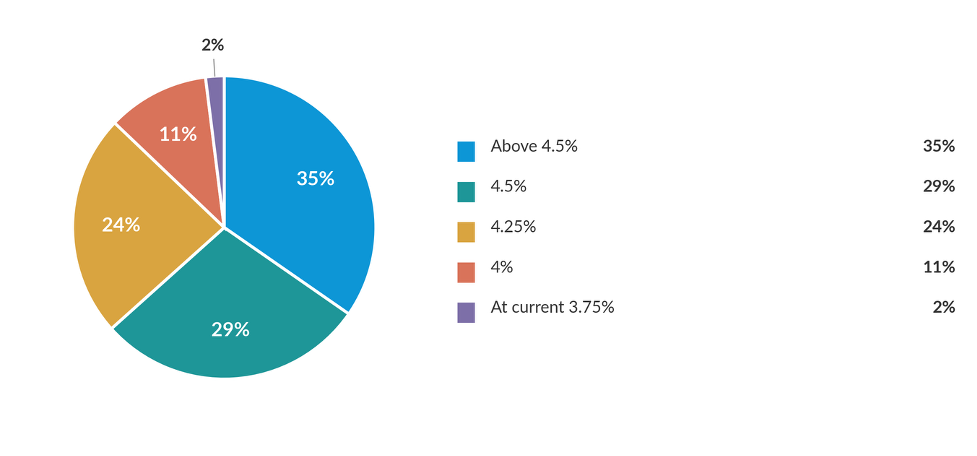
Where do you think the UK Bank Rate will peak?
GPU Futures: From Concept to Commercial Opportunity
One of the event’s most forward-looking discussions focused on GPU futures and the emergence of compute capacity as a potentially tradable commodity.
Before the panel began, attendees were divided on whether they would trade GPU compute futures if the products became available. Fifty-five percent said they would or were open to the idea, while 45% expressed no current interest.
By the end of the discussion, sentiment had shifted significantly. Sixty percent said GPU futures could become a major product segment on par with energy markets within two years, while only 4% dismissed the opportunity entirely.
The result suggests that institutional interest in compute markets may be developing faster than many would have expected. As AI adoption continues to increase worldwide, demand for computational resources is rapidly becoming a strategic business concern. The response indicates that many market participants already see a need for risk-transfer mechanisms to help manage exposure to that demand.
For trading firms, the question is no longer whether new asset classes will emerge, but how quickly they can incorporate them into existing workflows.
That challenge reinforces an increasingly important industry requirement: technology infrastructure must be flexible enough to support future opportunities without forcing firms to rebuild execution, risk and compliance processes every time a new market develops. This is the world TT is building for.
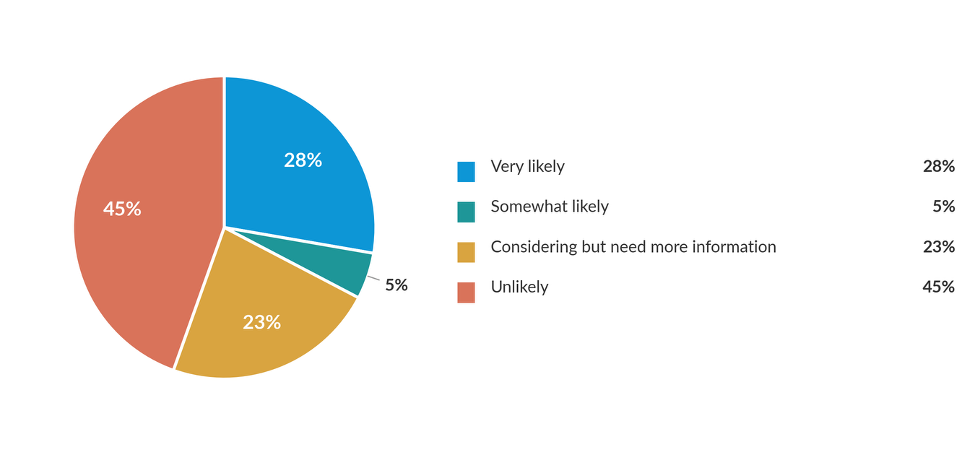
If/when GPU compute futures become available, how likely are you or your firm to trade them?
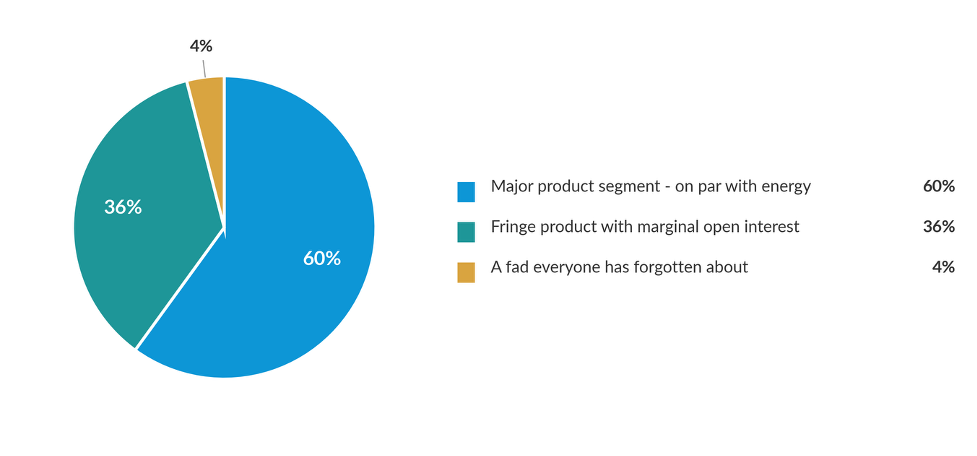
In two years’ time, what will have happened to compute derivatives?
AI Adoption Has Arrived, but Governance Remains Essential
If GPU futures represented a possible future opportunity, the next discussion focused on a reality that is already reshaping trading desks.
Audience polling revealed that AI has become a standard part of institutional workflows. Not a single respondent indicated that their firm prohibits AI tools altogether.
However, adoption is proceeding with clear guardrails. Nearly two-thirds of attendees said they use approved internal AI tools only, while a smaller group reported broader usage provided client or firm data is not exposed.
The finding is revealing. The debate within financial markets is shifting from whether AI will be adopted to how organizations can deploy AI responsibly while maintaining governance, security and regulatory controls.
The panel explored how firms are using automation to increase efficiency across increasingly complex trading environments. As desks expand across more asset classes, larger data sets and additional execution venues, automation is becoming a necessity rather than a competitive advantage.
This aligns with TT’s view that AI’s greatest value lies not in replacing human decision-making but in removing operational friction. With visibility across workflow, execution, risk and market data, we are uniquely positioned to apply AI where it can deliver measurable improvements to how firms build, trade and operate.
The audience response suggests the industry increasingly shares that perspective.
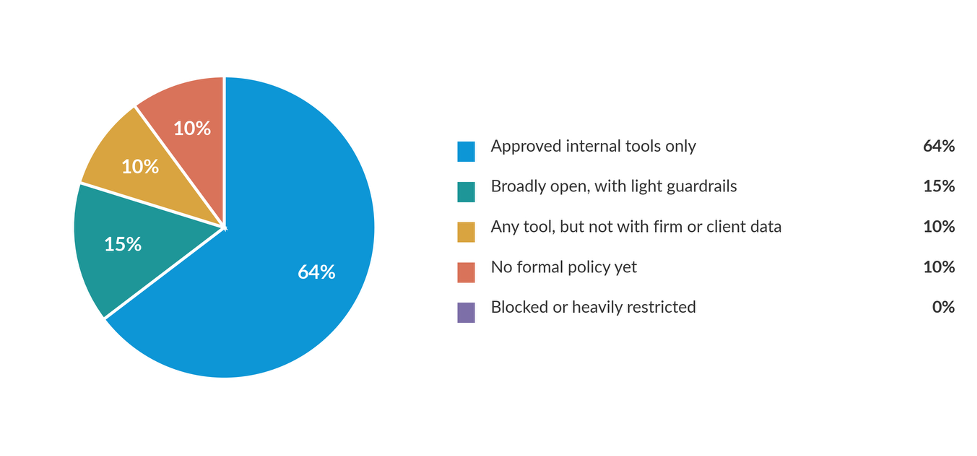
What best describes your firm’s policy on employees using AI tools?
Prediction Markets on the Institutional Radar
Prediction markets also prompted a strong audience response. A striking 94% of attendees said they expect prediction markets to become part of institutional trading within five years. However, most saw their role as a data or signal source rather than as a fully-fledged tradable asset class.
Only 17% expected prediction markets to become tradable instruments on traditional derivatives exchanges. That distinction matters: the audience sees value in the information these markets can generate, even if the path to broader exchange-traded adoption remains uncertain.
For those who do see event contracts as a genuine asset class, they’ll soon be tradable on TT. We recently announced our plan to support trading of Kalshi and OG.com’s regulated event contracts, continuing our strategy of providing clients access to markets they want to trade using familiar tools and workflows.
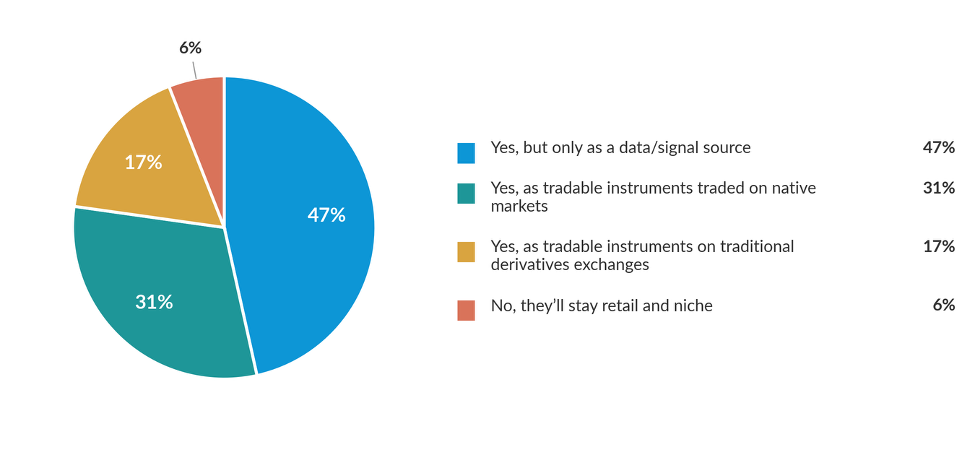
Will prediction markets become part of institutional trading within five years?
European Power Markets Set for Greater Convergence
The final panel explored how European power markets are changing and what the future may hold for market structure, liquidity and execution.
Audience polling pointed to two clear expectations.
First, respondents expect greater convergence between exchange-traded and OTC markets, creating a more connected liquidity ecosystem by 2030.
Second, they anticpate continued growth in algorithmic and AI-driven trading, with new market makers and automated liquidity providers expected to contribute significantly to future market participation.
These results suggest that market boundaries are becoming increasingly blurred. Historically separate pools of liquidity are gradually moving towards more connected trading models, while automation continues to reshape how participants discover, access and manage liquidity.
For market operators and trading firms alike, the challenge will be creating workflows capable of spanning both listed and bilateral trading environments without adding operational complexity.
This is one reason TT continues to invest in OTC workflows. Earlier this year, we announced a partnership with Enmacc, linking Enmacc’s energy trading ecosystem with TT’s execution capabilities to help market participants access liquidity more efficiently while managing risk across both OTC and exchange-traded markets.
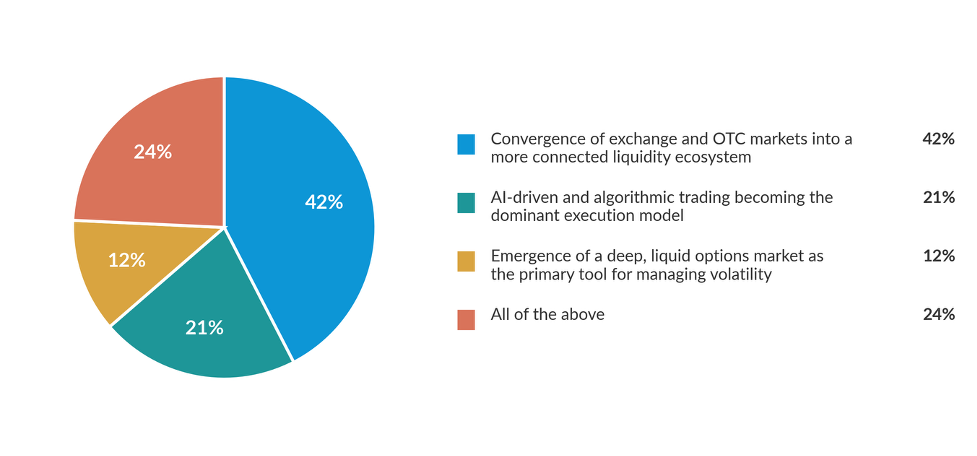
By 2030, what will have been the single biggest change in European power and energy trading?
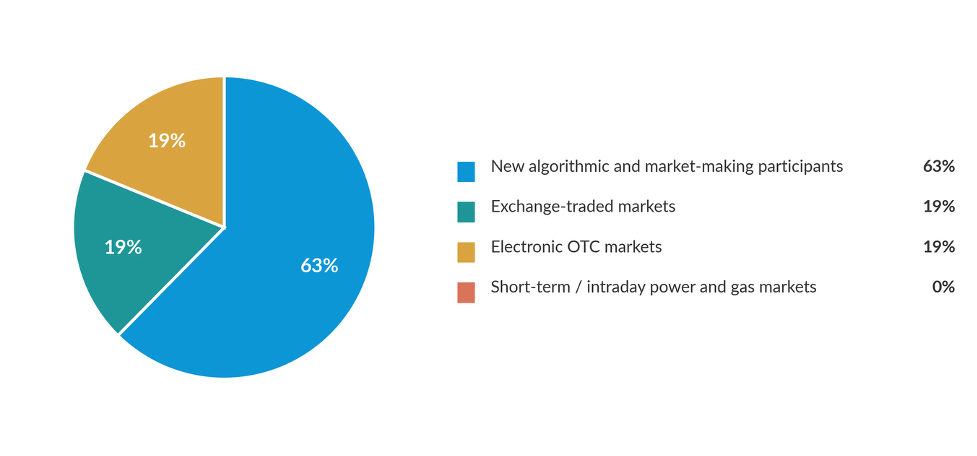
For energy markets, where do you expect the biggest growth in liquidity over the next five years?
The Bigger Picture
At first glance, GPU futures, prediction markets, AI adoption and European power markets appear to be separate, unconnected topics.
Yet the audience polling revealed a consistent underlying theme: Market participants expect the trading landscape to become broader, faster and more interconnected. New sources of liquidity, new forms of market intelligence and entirely new asset classes are emerging simultaneously.
The firms that succeed in this environment will not necessarily be those that predict every new opportunity first. They will be those that can adapt most effectively when opportunities appear.
As the pace of market innovation accelerates, competitive advantage will increasingly depend on a firm’s ability to connect new markets, workflows and technologies without continually rebuilding its infrastructure. Helping clients navigate that complexity remains TT’s focus, enabling them to pursue the opportunities of tomorrow using the tools and workflows they trust today.
To learn more about our integrated, multi-asset trading solutions for the full trade life cycle, contact us today.