Why Trade Surveillance Needs Configurable Models
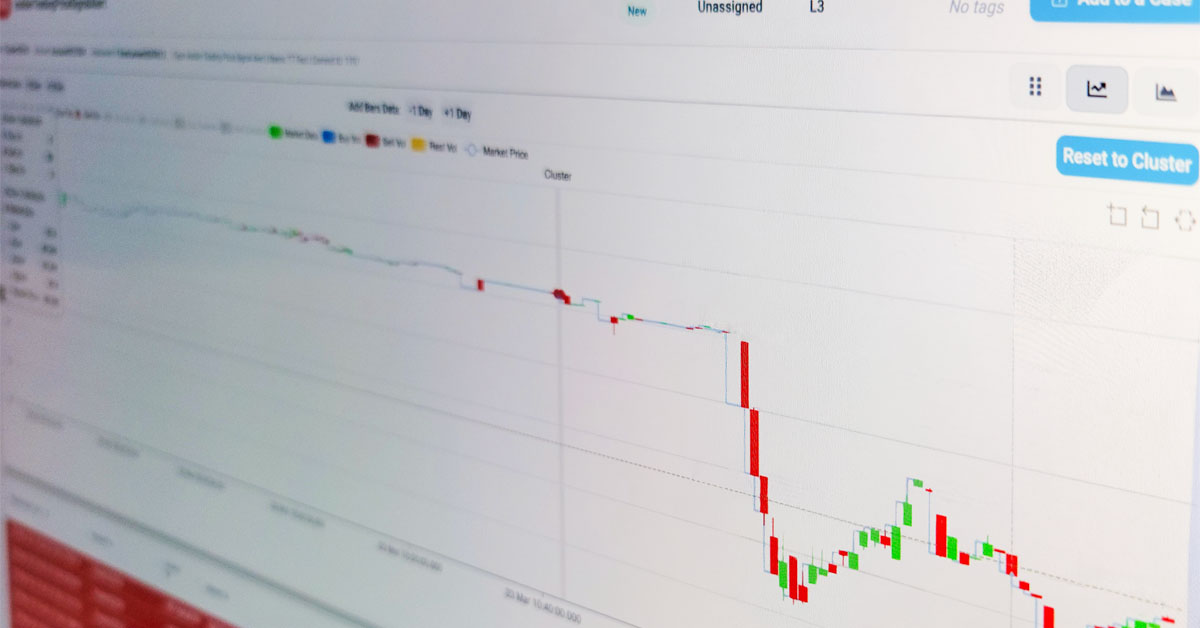
At 06:49 a.m. ET on Monday, March 23 this year, around 3,000 West Texas Intermediate (WTI) futures contracts were traded on NYMEX, an unusually high number for that time of day. What made the trades more unusual was that 15 minutes later President Trump posted on Truth Social that the U.S. and Iran had held a conversation about a complete and total resolution of hostilities. Oil prices fell sharply following the announcement.
To any compliance team reviewing trading activity, the size of the trade and timing of the profit would have looked suspicious. But without configurable models embedded within a surveillance tool, it would have been hard to catch.
Surveillance systems have historically been built to detect potential insider trading around scheduled news, such as quarterly earnings or key financial data releases. They aren’t built to identify suspicious trades ahead of an unexpected market-moving headline.
Configurable models allow firms to tailor alerts around specific market activities. In this example, the model caught the trade because it was set to identify unusual profits generated in close proximity to significant price movements, without necessarily having the trigger of a scheduled news event. This gives compliance teams another way to surface activity that may warrant investigation, even when the catalyst was impossible to predict.
Multiple Approaches to Surveillance
You can’t take a one-size-fits-all approach to trade surveillance.
For smaller firms with limited compliance resources and relatively straightforward trading operations, a platform that provides preconfigured models can be a good fit. Larger institutions with more complex operations may need greater control over thresholds, filters and detection logic.
TT Trade Surveillance provides both out-of-the-box core models and configurable models within the same platform. Compliance teams can use core models for broad coverage while applying targeted models with calibrated thresholds and filters that meet specific requirements.
Users can define parameters at a granular level, including the percentage, time window and notional threshold, with changes recorded in an audit trail. They can document the rationale for a change and revert to previous settings when needed. That explainability is important. If a regulator asks a firm to identify activity above a particular threshold, the compliance team needs to demonstrate how its model works and why its chosen parameters are appropriate.
Tailoring Surveillance Across the Organization
The ability to configure models allows users to tailor alerts to different desks, asset classes, trading styles and instruments. A high-frequency futures strategy requires a different approach to a high-touch energy trade. Even within the same asset class, an illiquid instrument shouldn’t be assessed against the same parameters as a product with deep liquidity.
With TT Trade Surveillance, you can build multiple versions of the same model and apply different thresholds and filters to specific subsets of activity. The same principle extends across venues, products, desks and even individual traders. This becomes particularly important for multi-asset surveillance. Market behavior, liquidity and trading patterns vary substantially between equities, fixed income, futures, commodities and newer products. Our configurable models are asset-class agnostic; users can adapt them to the specifics of an asset class rather than force every instrument through the same logic.
Building for New Markets
Configurable models give compliance teams a way to respond as new markets and trading patterns emerge. The rise of event contracts presents distinct considerations for market surveillance, including how to identify potential information asymmetries around events whose outcomes can change rapidly.
A configurable price-signal model could, for example, identify an unusual profit shortly before a significant price movement and flag the activity for further review. The model doesn’t need to know in advance what event will move the market. Instead, it can look for defined relationships between trading activity, profitability and subsequent price movements.
The same flexibility proved useful when cryptocurrency markets developed. Rather than rebuilding surveillance from scratch, firms adjusted existing models to reflect a 24/7 market and different liquidity characteristics. The same can be true for prediction markets.
Backed by Machine Learning
Alongside configurable models, our trade surveillance platform offers machine learning tools that assess activity without relying on manually selected thresholds. Tightly calibrated configurable models run against known risks while a machine learning model runs in parallel. If the manual thresholds are too restrictive or miscalibrated, the machine learning layer can identify behavior the targeted model missed.
We bring both machine learning and human defined parameters together within a single platform, giving compliance teams the precision of configurable rules alongside broader checks on activity.
Combining these capabilities together reduces the need to operate separate surveillance systems to achieve different types of coverage.
Just as important, compliance teams need to be able to adjust their surveillance without relying on a vendor every time requirements change. TT’s configurable models are self-service, allowing users to adapt parameters as trading activity, risk profile and regulatory requirements evolve.
Building Flexibility into Surveillance
There is no single approach to trade surveillance that works for every firm, asset class or market. Some firms need pre-calibrated models that reduce the burden on small compliance teams; others want more granular control. Many firms need the best of both worlds.
TT Trade Surveillance supports all of these approaches.
As trading becomes increasingly multi-asset and institutional firms enter new markets, surveillance needs will continue to evolve. Compliance teams need technology that can evolve with them.
At TT, we’ve built our platform with flexibility at its core. Our multi-asset trade surveillance offers highly configurable models, combined with machine learning and the agility to adapt to new markets and instruments as they emerge.
Get in touch today to learn how configurable models can support your surveillance operations.